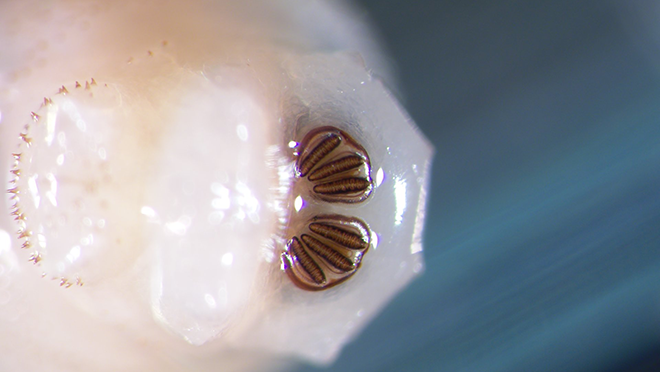
A flesh-eating parasite once eradicated from the United States is making a dangerous comeback just 70 miles south of the Texas border — and experts warn it’s only a matter of time before it re-enters the country. The New World Screwworm (Cochliomyia hominivorax), known for its devastating impact on livestock, has been confirmed in Nuevo León, Mexico, prompting federal surveillance and renewed biosecurity efforts.
Andrew Coppin, CEO of Ranchbot — a remote monitoring platform used by ranchers across the U.S. and Australia — is sounding the alarm. “The conditions are ripe for re-entry,” he warns, citing rising temperatures, livestock movement, and gaps in early detection. “If this parasite crosses the border, it could cripple the cattle industry and drive beef prices even higher.”
What Is the Screwworm?
The New World Screwworm is a parasitic fly whose larvae feed on the living tissue of warm-blooded animals. Once inside a wound, the larvae multiply rapidly, causing severe infections, tissue damage, and often death if untreated. The U.S. successfully eradicated the pest in the 1960s through sterile fly release programs, but outbreaks in Central America and the Caribbean have persisted.
The recent case in Sabinas Hidalgo, Nuevo León — involving an 8-month-old cow transported from Veracruz — marks the northernmost detection in decades. In response, the USDA has deployed thousands of traps across Texas, Arizona, and New Mexico, and ramped up sterile fly production in Panama and Texas.
Tech as a First Line of Defense
Coppin believes Ranchbot’s infrastructure could be repurposed for biosecurity monitoring. “Our platform already helps ranchers manage water, land, and livestock in real time,” he says. “With the right data inputs, it could alert ranchers and regulators to early signs of infestation — before the parasite spreads.”
Ranchbot’s sensors and dashboards are already in use across the American West, including parts of Utah. The technology offers a scalable way to monitor livestock health and environmental changes that could signal parasite activity.
Local Impact: Why Cedar Valley Should Pay Attention
While Utah may seem far from the border, the state’s ranching community is deeply connected to national livestock networks. Livestock auctions, feedlots, and transport corridors link Utah producers to Texas and beyond. A screwworm outbreak could:
- Disrupt cattle movement and sales across state lines
- Increase veterinary costs and quarantine protocols
- Threaten wildlife in the Wasatch and West Desert regions
- Drive up beef prices for consumers and food producers
Local Agriculture and Livestock operations should stay informed and consider integrating early-warning systems. Utah’s Department of Agriculture and Food has not issued a formal alert, but regional preparedness is key.
As the parasite inches closer to the border, vigilance and tech-enabled monitoring may be the best defense for Utah’s ranchers — and for the families who depend on them.

Mike Kieffer – Editor-in-Chief, Cedar Valley Sentinel
Mike Kieffer is a dynamic leader and community advocate based in Eagle Mountain, Utah. He serves as the Editor-in-Chief of the Cedar Valley Sentinel, a local publication dedicated to informing, inspiring, and elevating the Cedar Valley community through honest and accurate journalism. With a passion for fostering connections, Kieffer has made it his mission to highlight local businesses, provide reliable news, and support community development.
Beyond his editorial role, Kieffer is the owner of Lake Mountain Media, LLC, a company specializing in media and communications, and the co-owner of Quail Run Farms, which focuses on sustainable farming and community engagement. He also actively contributes to the local economy and culture as a member of the Eagle Mountain Chamber of Commerce.
Kieffer’s dedication extends to preserving and promoting the history and heritage of the Cedar Valley area. He often participates in community-centered events and media, including podcasts that explore the unique aspects of life in the region. Through his varied endeavors, he remains a steadfast advocate for the growth and enrichment of the local community.