
In a world where speech is increasingly policed not just by governments but by social norms, institutions, and even well-intentioned individuals, the concept of intellectual freedom is quietly under siege. Rooted in the democratic ideals championed by the American Library Association and protected by the First Amendment, the right to seek and express ideas freely is foundational to informed citizenship. Yet as history shows—from the Sedition Acts of 1798 to modern forms of self-censorship—suppression doesn’t always wear the face of authoritarianism. Sometimes it looks like “appropriate language,” euphemisms, or controlled vocabularies designed to sanitize discourse. And as Orwell warned in 1984, when language is reduced, so too is thought. This article explores the evolving landscape of censorship—legal, social, and semantic—and the importance of resisting efforts that narrow the range of acceptable expression.
The political season has started. And the discussions will start, we just need to remember that everyone has the right to share the message and information during this season. You will see many people attempt to shut down the conversation or minimize the impact of what is shared.
The Ad Hominem
One thing to watch for is what is called an ad hominem. An ad hominem (Latin for “to the person”) attack occurs when someone responds to arguments by attacking a person’s character or traits instead of engaging with the substance of their argument. It’s a common rhetorical tactic used to distract, deflect, or discredit the message by targeting the messenger.
Examples of an Ad hominem:
- “Of course you believe that — you’re just a boomer.”
Dismisses an argument based on age rather than addressing the point being made. - “You can’t talk about poverty — you’re rich!”
Discredits someone’s view based on their personal background, rather than the content of their message. - “Why should we take health advice from someone who’s overweight?”
Attacks the individual’s appearance or personal health instead of discussing the validity of their health information. - “You’re just a stay-at-home mom, what do you know about politics?”
Dismisses someone’s opinion based on their occupation or role rather than their argument. - “Only an idiot would say that.”
Attacks the speaker’s intelligence rather than the substance of their opinion. - That’s what I’d expect from someone who votes .”
Uses political affiliation as a way to invalidate a statement rather than engaging with it. - “You’re just saying that for clicks and likes.”
Attributes a motive (attention-seeking) to avoid responding to the actual point. - “How can you talk about climate change when you drive a car?”
Suggests hypocrisy instead of directly challenging the argument or data presented. - “Don’t listen to her — she’s just a Karen.”
Uses a stereotype to dismiss a person’s viewpoint without addressing what was said.
Ad hominem attacks tend to escalate conflict, deter thoughtful discussion, and polarize conversation threads. On platforms like Twitter/X, Facebook, or Reddit, this fallacy is often used to rally support through mockery or dismissal — not through reason.
Ad hominem attacks shift the conversation away from logic and evidence and focus instead on undermining credibility. It’s a logical fallacy and weakens constructive discourse, often signaling that the person doesn’t have a strong rebuttal to the actual point being made.
Intellectual Freedom
According to the American Library Association (ALA), “Intellectual freedom is the right of every individual to both seek and receive information from all points of view without restriction. It provides for free access to all expressions of ideas through which all sides of a question, cause or movement may be explored.” According to the ALA, intellectual freedom is important. “Intellectual freedom is the basis for our democratic system. We expect our people to be self-governors. But to do so responsibly, our citizenry must be well-informed… Intellectual freedom encompasses the freedom to hold, receive and disseminate ideas.”
Censorship can come in many forms, and those forms are usually done by well-meaning people, organizations, and movements. The ALA defines who attempts censorship in the following way, “In most instances, a censor is a sincerely concerned individual who believes that censorship can improve society, protect children, and restore what the censor sees as lost moral values. But under the First Amendment to the United States Constitution, each of us has the right to read, view, listen to, and disseminate constitutionally protected ideas, even if a censor finds those ideas offensive.” The ALA continues in its censorship FAQ, “Censors might sincerely believe that certain materials are so offensive, or present ideas that are so hateful and destructive to society, that they simply must not see the light of day. Others are worried that younger or weaker people will be badly influenced by bad ideas, and will do bad things as a result. Still others believe that there is a very clear distinction between ideas that are right and morally uplifting, and ideas that are wrong and morally corrupting, and wish to ensure that society has the benefit of their perception. They believe that certain individuals, certain institutions, even society itself, will be endangered if particular ideas are disseminated without restriction. What censors often don’t consider is that, if they succeed in suppressing the ideas they don’t like today, others may use that precedent to suppress the ideas they do like tomorrow.“
According to the book “Banned in the Media, A reference guide to Censorship in the Press, Motion Pictures, Broadcasting, and the Internet” by Herbert N. Foerstel, censorship has been something that was part of the founding of America by trying to censor newspapers. He states, “Almost from its inception, the press was the adversary of government and therefore, the most politically dangerous form of communication. It was for this very reason that the Founding Fathers felt the need to provide the press with extraordinary constitutional protection.” US history has many examples of attempts to censor the press. Foerstel explains that The Alien and Sedition Acts of 1798, approved by John Quincy Adams, “intended to silence newspaper criticism of public officials… specifying criminal penalties for anyone who produced any scandalous writing against the government of the United States.” This was not just an attempt to censor the press but its citizens as well.

“Language is considered one of the most important means of initiating, synthesizing, and reinforcing ways of thinking, feeling and behaviour which are functionally related to the social group. It does not, of itself, prevent the expression of specific ideas or confine the individual to a given level of conceptualization, but certain ideas and generalizations are facilitated rather than others.”
— Basil Bernstein, “Class, Codes and Control” – 1971
We are seeing a lot of this in today’s world. Some words, phrases, and terms have been censored by social means. There may not be a law that says you can’t say or use certain terms, but they have become socially unacceptable. This, in turn, makes people less likely to express their concerns and opinions in specific areas. The article “Language Police” by Jennifer Latson, author and writer/editor at Rice University’s Jones Graduate School of Business, discusses this problem. She starts by stating, “You don’t have to ban words to get people to stop using them.” Latson points out that self-censorship can and is an issue. “That became evident in December, when reports that White House officials had banned seven words at the Centers for Disease Control and Prevention (including “diversity” and “science-based”) turned out to be a red herring. The words had been changed in official documents by the CDC’s own employees to eliminate triggers that might make their projects the target of budget cuts. By replacing politically-charged terms with euphemisms and abstractions, the public health workers revealed their best guesses — and worst fears — about what would rub the administration the wrong way. ” She illustrates that idea by quoting someone who lived through Uruguay’s military dictatorship in the 1970s. “The process of self-censorship was incredibly insidious: It wasn’t just that you stopped talking about certain things with other people — you stopped thinking them yourself. Your internal dialogue just dried up.”
Controlled Vocabulary
One way censorship can sneak into the lives of individuals would be through the use of what is now called Vocabulary Control. Vocabulary control started with indexing information and using a common vocabulary for that purpose. The Blog Librarianship Studies and Information Technology defines Vocabulary Control as “the process of creating, maintaining, and using a controlled vocabulary, where a limited set of terms must be used to index documents, and to search for these documents, in a particular system. It may be defined as a list of terms showing their relationships and used to represent the specific subject of the document.”
Controlled Vocabulary is now being seen in more places than to organize documents for indexing and fast retrieval. There is a trend to use Vocabulary Control to create a subset of natural language to reduce or eliminate ambiguity and complexity. Individuals, Businesses, and Governments are now using Vocabulary Control. But the true problem is that by creating a subset of the natural language, they are also creating a subset of Intellectual Freedom. They are telling people how to express their ideas and what terms they can use to express those ideas, as well as manipulating the natural meaning of words by creating a “confined meaning.” By creating a subset of terms or a taxonomy that is used, they are, in essence, diminishing the speaker’s range of thought. In the popular book 1984 by George Orwell, this type of thinking leads to what is known as newspeak.
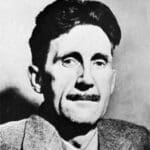
“newspeak, propagandistic language that is characterized by euphemism, circumlocution, and the inversion of customary meanings. The term was coined by George Orwell in his novel Nineteen Eighty-four (1949). Newspeak, “designed to diminish the range of thought,” was the language preferred by Big Brother’s pervasive enforcers.
Types of newspeak in Orwell’s Nineteen Eighty-four include the elimination of certain words or the removal of unorthodox meanings from certain words; the substitution of one word for another (e.g., uncold instead of warm and ungood instead of bad); the interchangeability of the parts of speech, such that any word in the language could be used as either noun, verb, adjective, or adverb (e.g., the word cut no longer existed, and the term knife acted as both noun and verb, as in the sentence “She knifed the bread”); and the creation of words for political purposes e.g., goodthink, meaning “orthodoxy” or “to think in an orthodox manner”).”
— Britannica, The Editors of Encyclopaedia. “newspeak”. Encyclopedia Britannica, 8 Nov. 2022, https://www.britannica.com/art/newspeak. Accessed 12 April 2023.
According to the American Library Association, there is a way to fight censorship. “Stay informed. Know what is happening in your state legislature, local school and library boards, and city councils. Write letters expressing your view to your mayor, and your state and federal representatives and senators. Attend your local school and library board meetings.“
Photo by Mick Haupt on Unsplash

Mike Kieffer – Editor-in-Chief, Cedar Valley Sentinel
Mike Kieffer is a dynamic leader and community advocate based in Eagle Mountain, Utah. He serves as the Editor-in-Chief of the Cedar Valley Sentinel, a local publication dedicated to informing, inspiring, and elevating the Cedar Valley community through honest and accurate journalism. With a passion for fostering connections, Kieffer has made it his mission to highlight local businesses, provide reliable news, and support community development.
Beyond his editorial role, Kieffer is the owner of Lake Mountain Media, LLC, a company specializing in media and communications, and the co-owner of Quail Run Farms, which focuses on sustainable farming and community engagement. He also actively contributes to the local economy and culture as a member of the Eagle Mountain Chamber of Commerce.
Kieffer’s dedication extends to preserving and promoting the history and heritage of the Cedar Valley area. He often participates in community-centered events and media, including podcasts that explore the unique aspects of life in the region. Through his varied endeavors, he remains a steadfast advocate for the growth and enrichment of the local community.