Well now, gather ’round, you folks in Cedar Valley! Ol’ Clemmie’s got a tale for ya, not one of them really old-timey ones that goes back to wagons and such in Lehi, but one about how a brand new city sprung up right here in our own neck of the woods.
You know, Cedar Valley’s been around for a good spell. Even before the Mormon pioneers came in ’47, the Goshute folks were here, and Mexican traders had their routes. Back in ’56, they even organized Cedar Valley as a county for a few years, with Cedar Fort bein’ the county seat.
But the story of Eagle Mountain as its own place, that’s a more recent chapter in our valley’s history. Seems like folks had a dream for a good long while. Back in 1979, the Fitzgerald family, who were sheep ranchers on a big piece of land they called West Desert, had a vision. They wanted to build a city where families could be happy, surrounded by nature instead of all that city hustle and bustle. They even had plans for an airport, a golf course, churches, schools, and all the fixings. A Provo fella named Norbert Lafranca was brought in to help make their dream a reality.
Now, that vision took some time to really get goin’. It wasn’t until October 25th, 1996, that things started movin’ faster. There was an article in the Deseret News talkin’ about a group of developers workin’ to make Eagle Mountain the first town incorporated in Utah County since Vineyard. They were lookin’ at buildin’ a whole town from scratch on near about 27,000 acres west of Lehi, right here in Cedar Valley. Can you imagine that? Puttin’ a whole new town on the map! That would have made it the third-biggest city in the whole state, land-wise, even with only about fifty houses there at the time.
Then, on November 27th, 1996, the Deseret News announced that the Utah County Commission had given the thumbs up to form the Town of Eagle Mountain, coverin’ 42 square miles in Cedar Valley. All that was left was for the town leaders to file the papers with the lieutenant governor.
Now, they had to decide what to call this new place. Seems like “Nauvoo West” was a popular idea, since a lot of the folks involved in the plannin’ were members of the Church of Jesus Christ of Latter-day Saints and wanted to remember that early Mormon settlement in Illinois. But some folks worried that name might feel a bit exclusive. In the end, a fella named Bob Lynds came up with “Eagle Mountain” because you could often see eagles flyin’ around the valley and nestin’ in the hills. And that’s the name that stuck!
So, while Cedar Valley has a long and rich history, the City of Eagle Mountain is a more recent addition, born out of a dream and a lot of hard work to build somethin’ new right here in our valley. It just goes to show ya, history is always bein’ made!
Bibliography:
- “A Ride from the Past on a Road to the Future”:
- Preface and acknowledgements of the history project.
- Early history of Cedar Valley.
- Organization of Cedar Valley as a county in 1856.
- The Fitzgerald family’s vision for a city.
- Deseret News article on the proposal to incorporate Eagle Mountain, October 25, 1996.
- Utah County Commission approval of the petition to form Eagle Mountain, November 27, 1996.
- Consideration and selection of the name “Eagle Mountain”.
- Peterson, Margery J. OUR ROOTS GROW DEEP – A History of Cedar Valley, 2nd ed. (Mentioned in other sources as a history of the valley, providing context, though not directly detailing Eagle Mountain’s founding beyond its location in Cedar Valley).
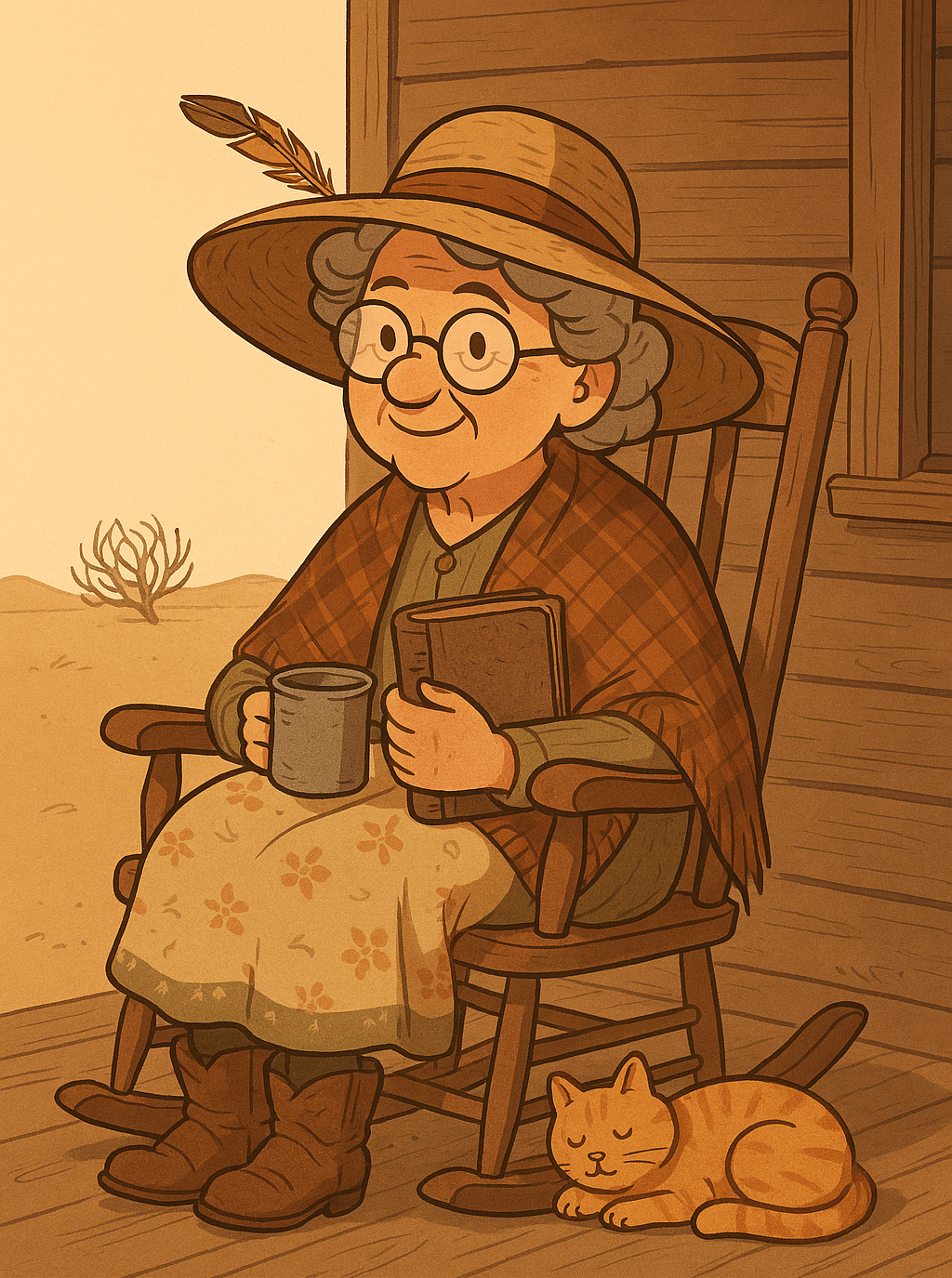
Unofficial Historian, Front Porch Philosopher & Occasional Pie Judge
Clementine Wrenfield (but you can call her Clemmie) is a self-appointed keeper of curious stories, dusty diaries, and questionable facts. Born under a clothesline and raised on her grandmother’s tall tales, Clemmie believes every fence post has a story—and she’s on a mission to find it. When she’s not digging through old trunks or sipping sassafras tea, she enjoys hosting dramatic reenactments of historical events using only sock puppets and her neighbor’s goats.
She’s never met a mystery she didn’t want to solve or a pie she didn’t want to critique.