Well now, gather ’round, you young’uns, and let ol’ Clemmie spin you a yarn about the very first time Lehi folks went to the ballot box to pick their own leader. It was a sight to behold, and a mighty important step for our little town.
Now, as you know, Lehi became a real city back on February 5, 1852 . But havin’ the papers signed and sealed was just the start. We needed folks to actually run things, to make sure the roads were passable and maybe even think about schoolin’ the young’uns and keepin’ things tidy .
For a spell after incorporatin’, the Governor and the Legislature appointed the first Mayor, Aldermen, and Councilors to get the ball rollin’. But everyone knew that wouldn’t be forever. The real heart of a community beats when the people get to choose their own leaders.
So, come January 29th, 1853, just about a year after we officially became a city, the townsfolk of what was still sometimes called Evansville, gathered at the schoolhouse. Now, compared to the fuss and bother of elections nowadays, it was a quiet affair, the history book says. But don’t let that fool ya; it was a momentous occasion.
They started things proper by pickin’ David Evans, Charles Hopkins, and Claiborne Thomas to be the judges of the election, and Jehial McConnell and John Spires to act as clerks. These were respected folks, the kind you trusted to count things fair and square.
Then came the big moment: votin’ for the very first Mayor of Lehi. And wouldn’t you know it, the old record of the City Council says they “voted unanimously that Silas P. Barnes be Mayor of said city”. Unanimously! That tells you somethin’ right there. It means the folks of Lehi, even in those early days, saw somethin’ special in Mr. Barnes.
Now, Silas P. Barnes, bless his heart, was a fella from Boston, a man with education, culture, and refinement, the book says. He even had some means and was known to help out his friends. For a rough-and-tumble frontier town like early Lehi, havin’ a leader like that must have felt like a real step forward. It showed they were serious about buildin’ a respectable community, one that valued more than just survival.
Along with Mayor Barnes, they also picked the first Aldermen: David Evans, David Savage, Charles Hopkins, and Abraham Losee. And the first Councilors were William S. S. Willes, Harrison Burgess, Daniel Collett, Israel Evans, Samuel W. White, Ezekiel Hopkins, Lorenzo H. Hatch, Thomas Green, and Richard C. Gibbons. That’s quite a crew, the foundation of our city’s leadership.
The significance of this first election can’t be overstated. It marked the true establishment of Lehi’s own local government. While the appointed officials got things started, this election showed that the power now rested with the people. They had a say in who would lead them, who would make decisions about their growing town. It was a tangible sign of their commitment to self-governance, that “innate love of law and order” that the history book talks about.
This election laid the groundwork for all the elections that would follow. It set the precedent for how Lehi would choose its leaders, how the community would come together to shape its own destiny. It was the first chapter in Lehi’s political life.
Now, Mr. Barnes, it’s said, found frontier life a bit too rugged and only stayed a few years before movin’ to California. But that first unanimous vote, that act of a young town choosing its leader, it echoed through the years, remindin’ us that the strength of Lehi lies in the hands of its people.
Bibliography:
- Gardner, Hamilton. History of Lehi: Including a Biographical Section. Published by the Lehi Pioneer Committee, The Deseret News, Salt Lake City, Utah, 1913.
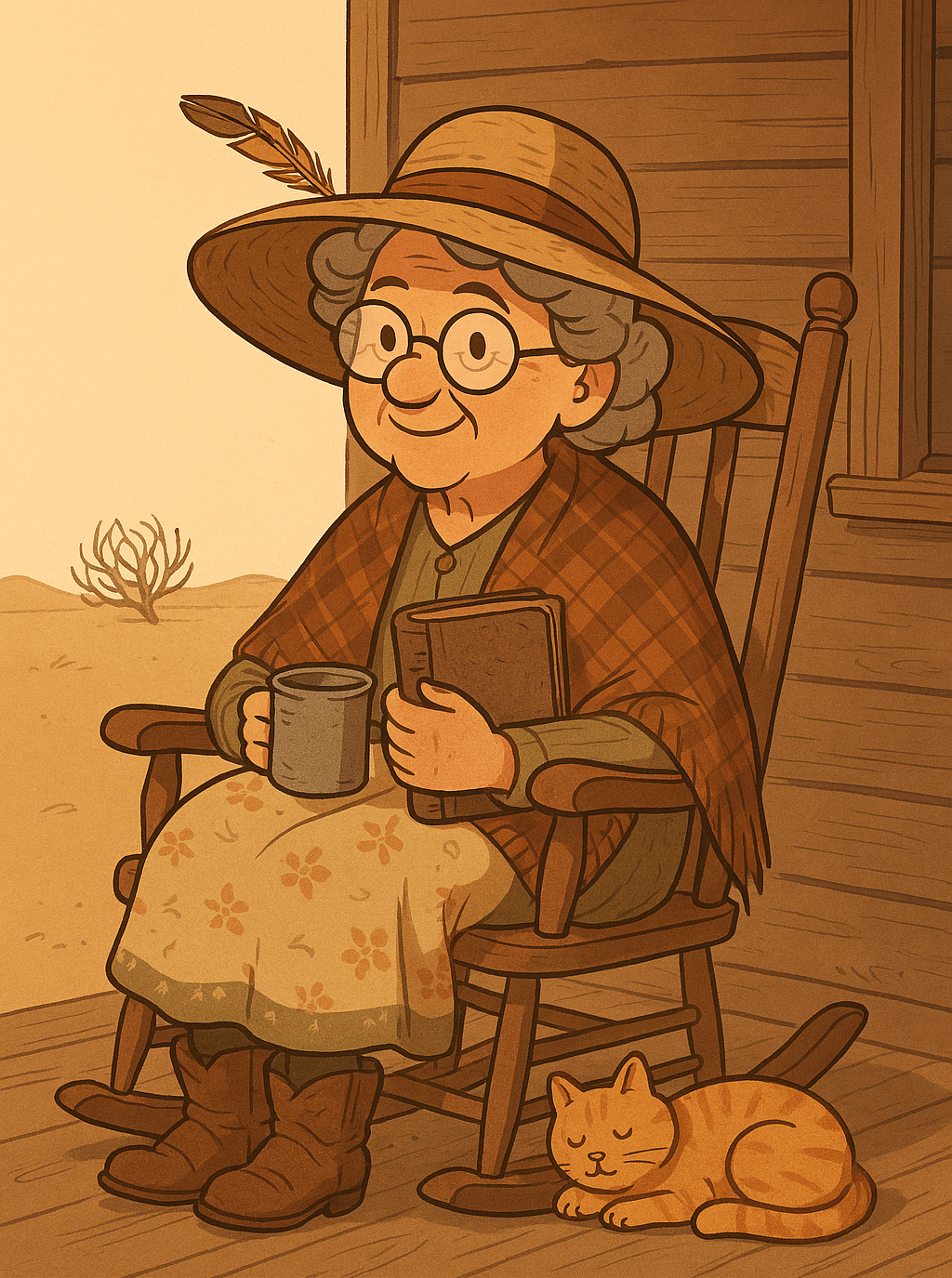
Unofficial Historian, Front Porch Philosopher & Occasional Pie Judge
Clementine Wrenfield (but you can call her Clemmie) is a self-appointed keeper of curious stories, dusty diaries, and questionable facts. Born under a clothesline and raised on her grandmother’s tall tales, Clemmie believes every fence post has a story—and she’s on a mission to find it. When she’s not digging through old trunks or sipping sassafras tea, she enjoys hosting dramatic reenactments of historical events using only sock puppets and her neighbor’s goats.
She’s never met a mystery she didn’t want to solve or a pie she didn’t want to critique.