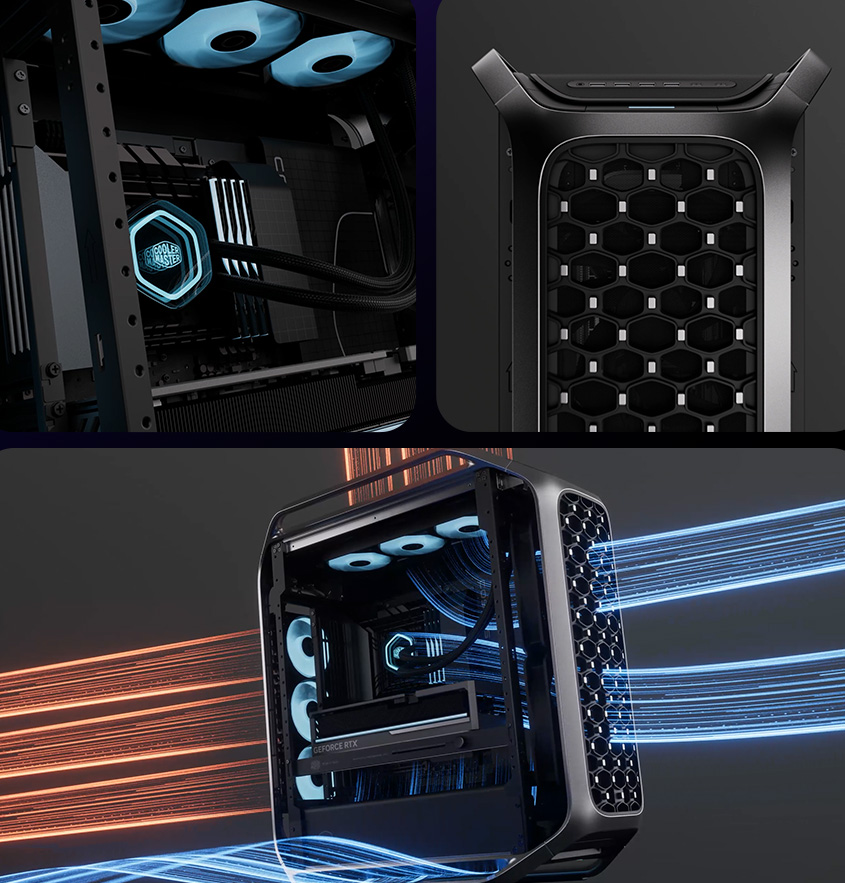
I’ll start with the part that matters: I currently use the Cooler Master N400 and love it.
It’s been bolted under my desk for years, quietly doing what a good case is supposed to do. Air flows where it should. Drives mount without drama. Nothing rattles. It’s not flashy, but it works — which, in my book, is the highest compliment you can give a piece of hardware.
So when Cooler Master announced a new wave of cases, cooling, and power solutions during its Las Vegas showcase earlier this month, I read through the materials with a simple question in mind: What would actually make me replace something that already works?
After looking through the details, the answer seems to be that Cooler Master didn’t abandon the thinking behind the N400. They refined it, modernized it, and scaled it for a world of larger graphics cards, hotter processors, and builders who expect more control over how air and cables move inside a system.
From Practical Box to Purpose-Built Platform
The N400 comes from an era when PC cases were designed like utility sheds: rectangular, ventilated, and straightforward. Airflow was the priority. Appearance was optional.
Cooler Master’s newest cases still respect airflow first, but they treat the interior like a workspace instead of an empty shell. Rather than hoping heat finds its way out, the new designs focus on deliberately guiding it where it belongs.
Two models in particular show how far that thinking has evolved: COSMOS Alpha and the MasterFrame 360 Series.
COSMOS Alpha: A Flagship Built for Control, Not Chaos
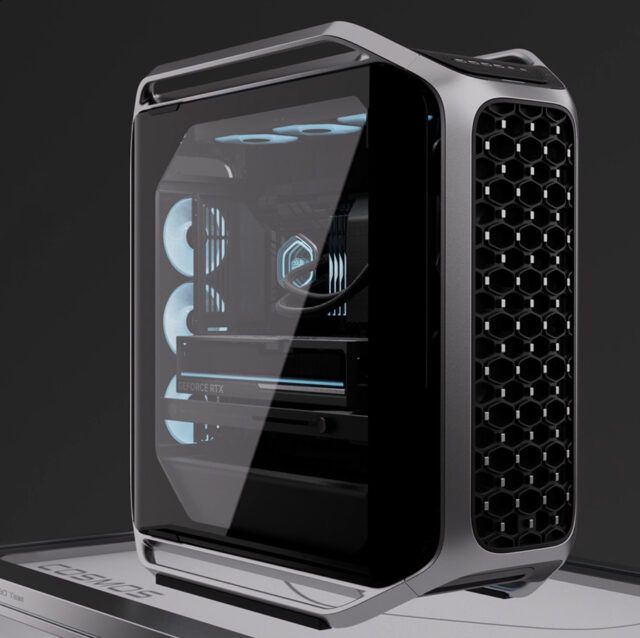
The COSMOS Alpha is the latest evolution of Cooler Master’s long-running COSMOS line, and it feels like a case designed by people who have actually fought with cable bundles and radiator clearance.
Compared to the fixed layout of the N400, COSMOS Alpha introduces a modular sliding motherboard tray and adjustable fan brackets that let builders move airflow closer to actual heat sources. It supports up to 15 fans and radiators as large as 420 millimeters, which is a clear acknowledgment that modern CPUs and GPUs are not getting cooler with age.
What stands out isn’t just the scale, but the intent. This is a case built to let users tune their system instead of working around it. The extra space for routing cables and positioning components doesn’t feel excessive — it feels preventative.
In practical terms, it’s the difference between opening all the windows in a room and installing proper ventilation.
MasterFrame 360 Series: Performance Meets Presentation
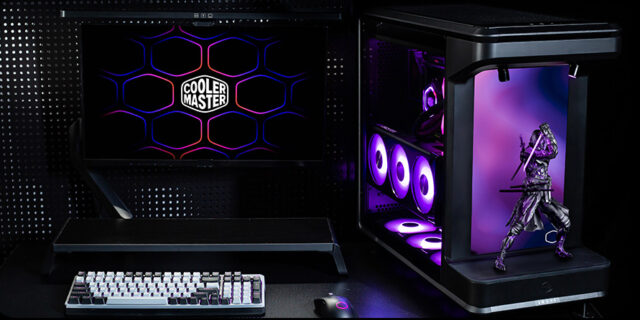
The MasterFrame 360 Series takes a very different approach. Where the N400 hides everything behind steel panels, the MasterFrame treats the PC like a workbench on display.
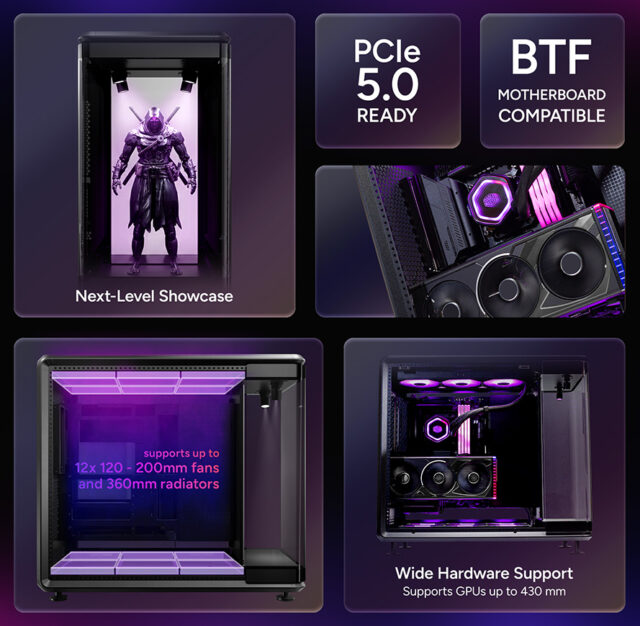
Designed as a 360-degree showcase platform, the MasterFrame series supports up to twelve fans, radiators up to 360 millimeters, and next-generation front I/O including USB-C. It also offers compatibility for a wide range of motherboard sizes and unusually large graphics cards.
This line clearly targets builders who want their system to be seen, not tucked under a desk. That’s not my personal style, but the performance considerations are still there. Cooling capacity, component clearance, and clean cable management aren’t sacrificed for looks — they’re part of the design.
Even if you never plan to display action figures inside your PC, the underlying airflow and layout philosophy is solid.
Why This Feels Like Evolution, Not Replacement
What I appreciate most about Cooler Master’s current direction is that it doesn’t feel like a rejection of older designs like the N400. It feels like an acknowledgment that the fundamentals still matter, but the hardware has changed.
Modern systems run hotter. Graphics cards are larger and heavier. Power delivery is more complex. These new cases address those realities directly, instead of layering aesthetics on top of outdated layouts.
The N400 taught me to value simple airflow paths and practical construction. COSMOS Alpha and MasterFrame 360 build on that foundation with better thermal targeting, safer support for large components, and layouts that reduce frustration instead of adding it.
Final Thoughts
I’m not rushing to retire my N400. Loyalty still counts for something, especially when hardware has earned it.
But if I were building a new system today — especially one using current-generation CPUs and GPUs — Cooler Master’s latest cases make a strong case for themselves. They don’t try to reinvent what already works. They refine it, reinforce it, and give it room to grow.
That’s not marketing. That’s engineering maturity.
Have a tech question, a stubborn printer, or a computer that sounds like it’s trying to escape the room?
Email me at mark.stevens.tech@gmail.com.
Dad joke of the day:
I tried to clean up my cable management. Turns out the cables were just trying to express themselves.

Mark Stevens is a veteran IT Systems Architect with over two decades of hands-on experience in both legacy and modern tech environments. From mainframes and Novell networks to cloud migrations and cybersecurity, Mark has seen it all. When he’s not solving complex IT puzzles, he’s sharing insights on how old-school tech foundations still shape today’s digital world.