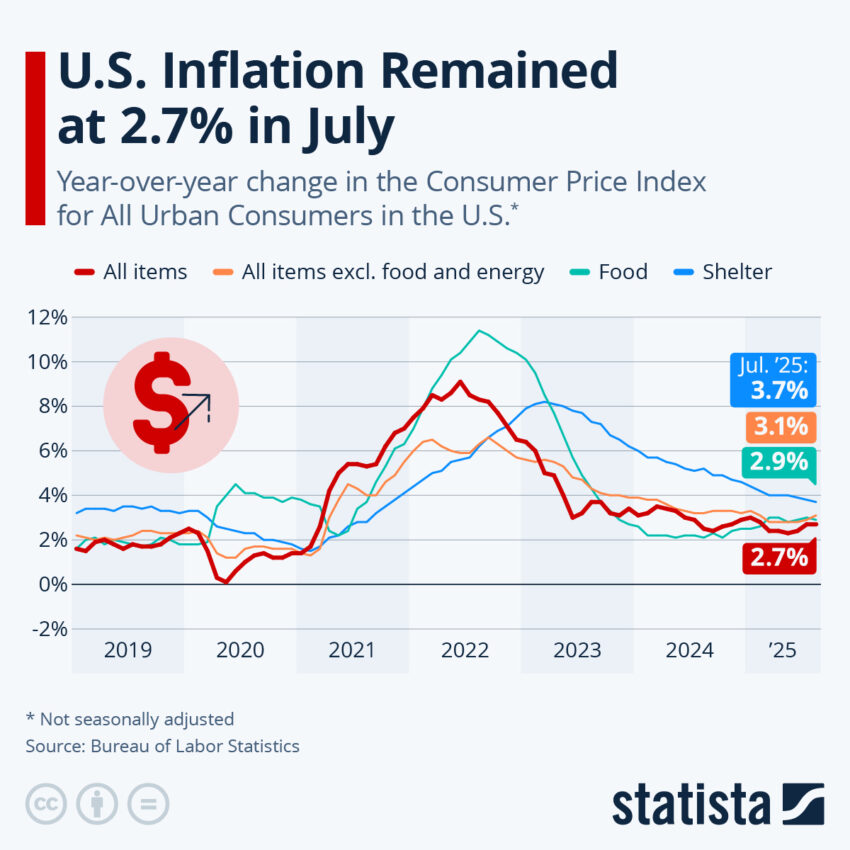
Over the past decade, prices have undergone significant changes — sometimes slowly, and sometimes almost overnight. Inflation, which measures how much the cost of everyday goods and services goes up over time, has shaped how we live, shop, and even where we can afford to live.
For residents in Eagle Mountain, Lehi, Saratoga Springs, Cedar Fort, and Fairfield, the past ten years have brought both opportunities and challenges. Here’s how inflation has played out and what it’s meant for our communities.
A Quick Look Back: Calm, Spike, and Cool Down
For much of the mid-2010s, inflation in Utah was steady, about 1.5–2% a year. That meant prices were rising, but slowly enough that most people barely noticed.
Everything changed in 2021 and 2022. After the pandemic, pent-up demand, supply shortages, and global events sent prices soaring. Utah’s inflation rate even topped the national average for a while, peaking at around 9% in early 2022, the highest in 40 years.
Since then, inflation has cooled down. In early 2025, Utah’s rate sits closer to 1.5%, which is a bit lower than the national average.
How It’s Affected Everyday Life Here
Housing Costs: Past Surge, Present Cooldown, Future Uncertain
Housing has been the single largest cost shift for families in northern Utah County. In 2018, Utah’s median home price hovered near $300,000. By mid-2022, that number had shot past $500,000, a nearly 72% jump in just four years. Eagle Mountain reached a median of about $569,000, Lehi was close behind at $539,000, and Saratoga Springs surged in step. Even the smaller communities of Cedar Fort and Fairfield, once considered “affordable alternatives,” saw significant appreciation as growth pushed outward from the core cities.
The driving forces were clear: record-low interest rates in 2020–2021, an influx of new residents from other states, a tight housing supply, and pandemic-driven demand for larger living spaces. Homes often sold above asking price, with bidding wars becoming routine.
By late 2022, however, higher mortgage rates, climbing from under 3% to over 6%, began to slow the frenzy. Between mid-2022 and mid-2023, Eagle Mountain’s median sale price dropped about 13.7%, and Lehi’s fell around 8–9%. Statewide, prices eased by roughly 7–10%. Despite these dips, today’s prices remain significantly above pre-pandemic levels, and affordability remains a major challenge.
Looking Ahead:
Current data suggests Utah’s housing market is in a stabilization phase rather than a crash. Prices have stopped falling sharply, and some areas are showing modest month-to-month increases again. Economists expect three main factors to shape the next few years:
- Interest Rates – If rates fall below 6% again, more buyers could re-enter the market, putting upward pressure on prices.
- Population Growth – Utah County remains one of the fastest-growing regions in the U.S. The steady inflow of residents will keep demand high, especially for starter and mid-range homes.
- Housing Supply – New construction is helping, but not fast enough to meet demand. Zoning changes and large development projects in Eagle Mountain, Lehi, and Saratoga Springs could help, but most will take years to fully impact supply.
In short, while the double-digit annual gains of the pandemic are unlikely to return soon, prices aren’t expected to drop significantly either. For buyers, that means the “wait for a big crash” strategy may not pay off. For current homeowners, equity gains are likely to hold and may slowly build again over time. Renters, meanwhile, could continue facing higher costs unless more multi-family housing comes online in the next 2–3 years.
Paychecks vs. Prices
Wages have gone up across Utah County, especially in tech-driven areas like Lehi and Saratoga Springs. The median household income here is around $97,000, higher than both the state and national averages.
The problem? In 2022, prices rose faster than paychecks. That meant families were earning more dollars, but those dollars didn’t go as far. Only recently have wage gains started to catch up with inflation.
Groceries and Essentials
From milk to eggs to bread, grocery bills have been climbing. Food prices jumped nearly 24% nationwide between 2020 and 2024, and Utah shoppers have felt it at the register.
Some local families have adapted by buying in bulk, planting gardens, or even raising chickens for fresh eggs.
Transportation
Gas prices have been another sore spot. In July 2022, Utah hit a record average of $5.26 per gallon. For commuters in Eagle Mountain, Fairfield, and Cedar Fort, where driving is a must, that meant big jumps in monthly expenses. Vehicle prices also shot up, making it more expensive to replace or upgrade cars.
The Bottom Line for Northern Utah County
Life in our corner of Utah is still full of opportunity, but it’s undeniably more expensive than it was ten years ago. Housing is the biggest driver, but food, gas, and everyday essentials have all played a part.
The good news? Inflation has slowed, and Utah’s strong job market means more chances for wages to catch up. But for many families, the reality is that the higher prices we saw in the early 2020s have become the new normal.
Sources:
- U.S. Bureau of Labor Statistics, Consumer Price Index, U.S. City Average and Mountain West Region (2015–2025)
- Utah Foundation, Inflation in Utah: A Decade in Review (2024)
- Kem C. Gardner Policy Institute, University of Utah, State of Utah’s Housing Market: 2022–2024 (2024)
- Utah Department of Workforce Services, Local Area Unemployment Statistics and Wage Data (2024)
- Joint Economic Committee, U.S. Congress, The Cost of Inflation by State (2022)
- UtahRealEstate.com, Utah Housing Price Trends and Historical Median Prices (2023)
- Deseret News, “Utah’s Inflation Surge Hits 40-Year High” (July 13, 2022)
- KUTV/KMYU News, Inflation’s Impact on Utah Families: Food, Gas, and Housing Costs (2022
- KUER 90.1 NPR Utah, How Utah’s Rising Housing Costs Outpace Wages (2022)
- U.S. Department of Agriculture, Food Price Outlook: 2020–2024 Data (2024)
- AAA Gas Prices – Utah, Statewide Average Gasoline Price Data (2022–2024)
- Utah Energy Office, Utah Fuel Market Trends and Price Factors (2023)
Infographic: https://www.statista.com/chart/18344/year-over-year-change-of-the-consumer-price-index-for-all-urban-consumers/

Mike Kieffer – Editor-in-Chief, Cedar Valley Sentinel
Mike Kieffer is a dynamic leader and community advocate based in Eagle Mountain, Utah. He serves as the Editor-in-Chief of the Cedar Valley Sentinel, a local publication dedicated to informing, inspiring, and elevating the Cedar Valley community through honest and accurate journalism. With a passion for fostering connections, Kieffer has made it his mission to highlight local businesses, provide reliable news, and support community development.
Beyond his editorial role, Kieffer is the owner of Lake Mountain Media, LLC, a company specializing in media and communications, and the co-owner of Quail Run Farms, which focuses on sustainable farming and community engagement. He also actively contributes to the local economy and culture as a member of the Eagle Mountain Chamber of Commerce.
Kieffer’s dedication extends to preserving and promoting the history and heritage of the Cedar Valley area. He often participates in community-centered events and media, including podcasts that explore the unique aspects of life in the region. Through his varied endeavors, he remains a steadfast advocate for the growth and enrichment of the local community.